The Beginning of Everything
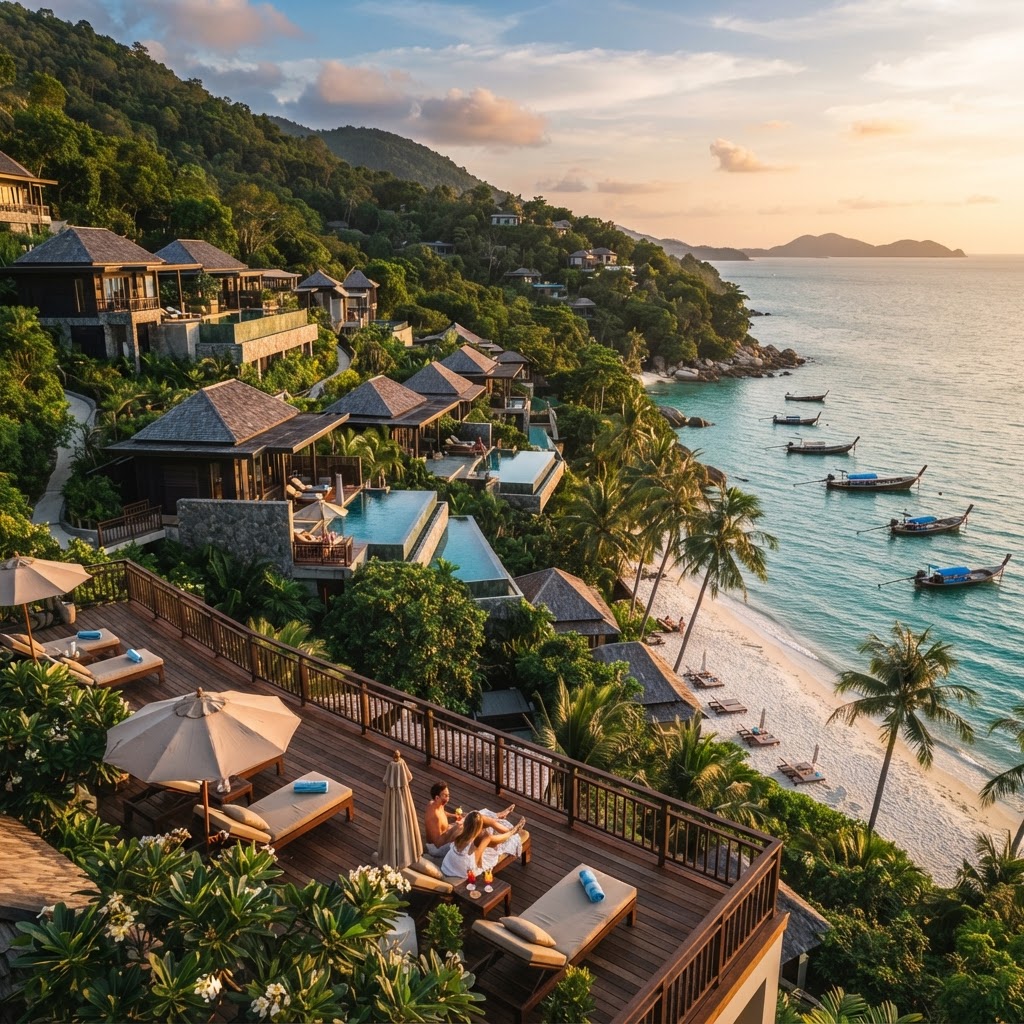
It is difficult to overstate the influence of Amanpuri. When it opened in 1988 on a coconut plantation above Pansea Beach, on the quiet western coast of Phuket, there was nothing else like it. No grand lobby, no marble columns, no gilded furniture. Instead, a low-slung series of Thai-style pavilions with sweeping tiled roofs, connected by stone paths through a coconut grove, overlooking one of the most beautiful bays in the Andaman Sea. The aesthetic was spare, serene, and deeply Thai — and it created a revolution in luxury hospitality.
Amanpuri — the name means 'place of peace' in Sanskrit — was the first Aman resort. It launched a brand that would become the most coveted name in luxury travel, with properties from Utah to Uttarakhand. But everything that makes an Aman an Aman began here: the minimalism, the discretion, the architectural sensitivity, the refusal to compromise, and the conviction that the greatest luxury is not gold leaf but space, silence, and the feeling that you are the only person on Earth.
Thirty-eight years later, Amanpuri remains the benchmark. Other resorts have bigger pools, more restaurants, more elaborate spas. None has the quiet authority of the original.
The Architecture: Thai Tradition, Perfected
The architecture of Amanpuri is a love letter to Thai design. The resort was conceived by the American architect Ed Tuttle, who spent months studying traditional Thai building forms before drawing a single line. The result is a resort that feels less designed than discovered — as if these pavilions had always existed in this coconut grove, waiting for someone to find them.
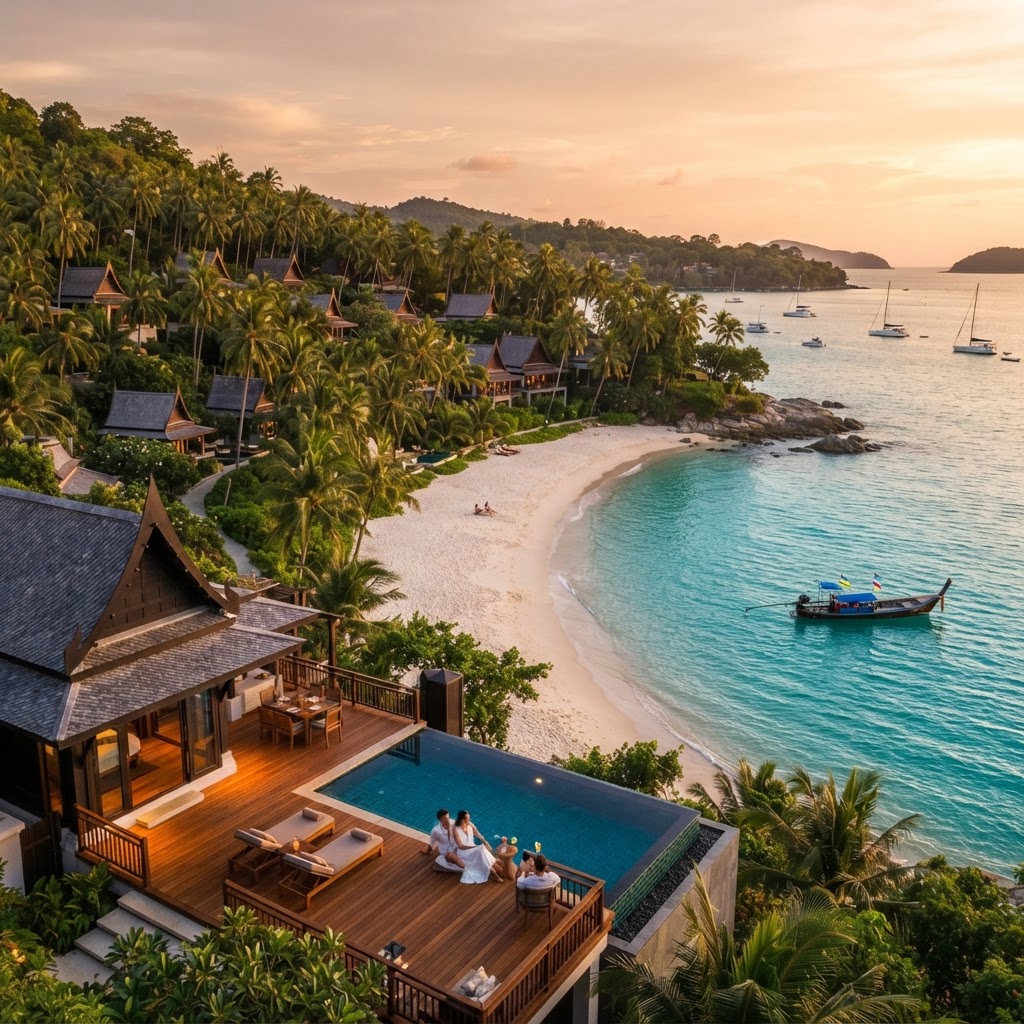
The pavilions are elevated on stilts, as Thai buildings have been for centuries, to catch the breeze and to protect against flooding. The roofs are the signature feature — steeply pitched, with eaves that sweep upward at the corners in the traditional Thai manner, covered in hand-glazed terracotta tiles that shift in colour from terracotta to green depending on the light. The walls are whitewashed. The floors are terrazzo. The details — door handles, light fixtures, joinery — are all custom-designed in a vocabulary that is both Thai and timeless.
The effect is calm so profound it is almost physical. Walking the stone paths between the pavilions, under the coconut palms, with the sound of the sea below, you feel your pulse slow. This is not an accident. Every sightline, every proportion, every material has been chosen to create this feeling. It is architecture as therapy.
The 40 pavilions at Amanpuri are the standard against which all other resort accommodation is measured. Each is a standalone structure — a raised Thai-style house with a bedroom, a living area, a bathroom, and an outdoor terrace. The interiors are spare to the point of monasticism: a bed, a daybed, a writing desk, and almost nothing else. The luxury is not in the objects but in the space between them — the volume of air, the quality of light, the silence.
The Ocean Pavilions look directly over the Andaman Sea. The Pavilion Suites add a private swimming pool. The Amanpuri Villas are the ultimate expression: multi-bedroom compounds with private pools, gardens, and dedicated staff, set apart from the main resort for total privacy. These are the villas that have hosted the people whose names you know — the sort of guests who value discretion above all else, and who know that Amanpuri is where the world goes to disappear.
The Villa 1
Villa 1 is the most sought-after address in Thai luxury hospitality. A two-bedroom villa with a 27-metre infinity pool, a private sala, a full kitchen, and a staff of four — including a chef who cooks to order. The villa is positioned on the headland above Pansea Beach, with views that stretch across the Andaman to the islands of Phang Nga Bay. It is, by any measure, one of the finest private residences available for short-term stay in Asia.
Pansea Beach: The Hotel's Private Bay
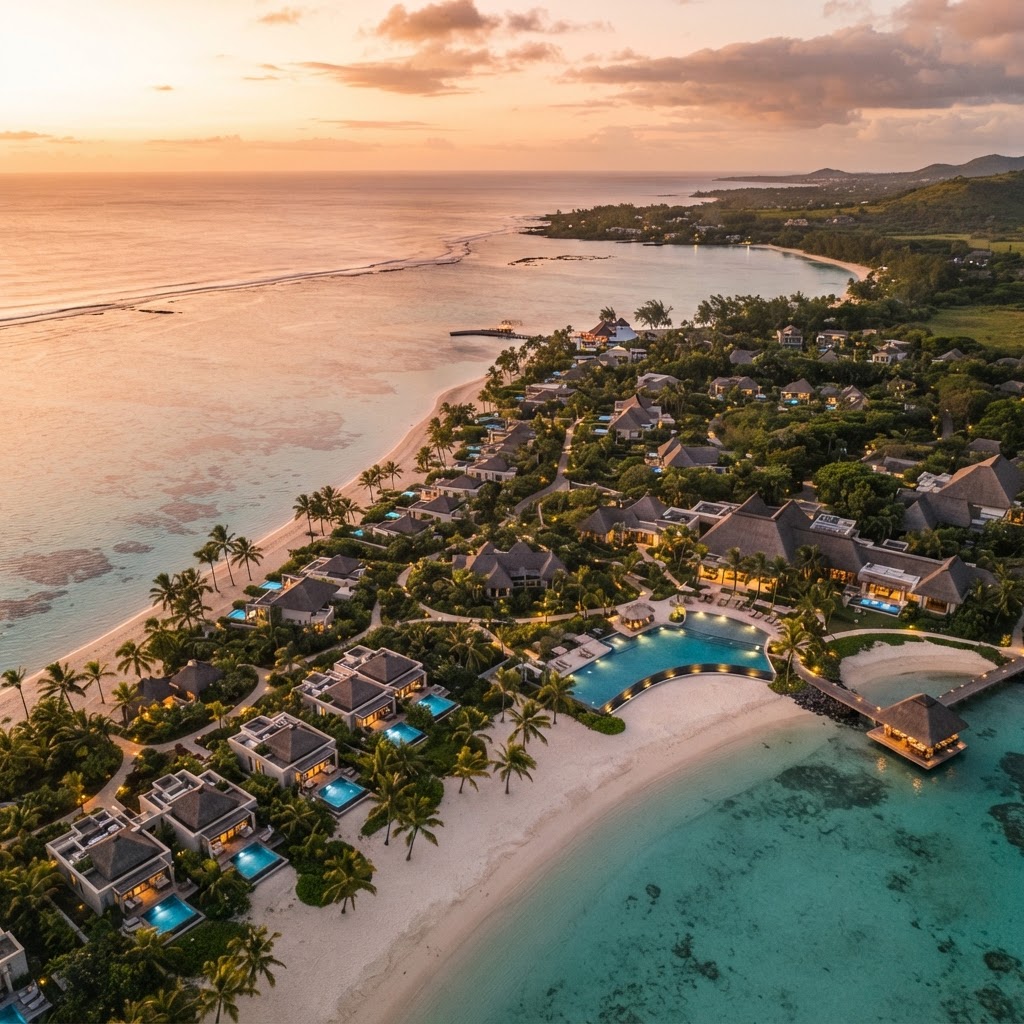
Amanpuri sits above Pansea Beach — a crescent of white sand flanked by granite headlands, with water so clear it seems lit from below. The beach is shared with its neighbour, the Chedi (now Trisara), but in practice, Pansea feels private: the two resorts are separated by a rocky headland, and Amanpuri's beach club occupies the quieter western end.
The Amanpuri Beach Club is the soul of the resort. A wooden deck above the sand, with sun loungers, parasols, and a bar that serves everything from fresh coconut water to Champagne. The staff appear with cold towels, fruit skewers, and frozen aloe sprays. The water is warm, calm, and shallow — perfect for swimming, snorkelling, or simply floating and staring at the sky.
The Amanpuri Boat
The resort has its own fleet of boats — from traditional Thai long-tails for short trips along the coast to a luxury cruiser for full-day charters. The skipper can take you to the Phi Phi Islands, Phang Nga Bay, or the hidden coves of the Similan Islands. A day on the water, snorkelling in coral gardens accessible only from the sea, with a picnic lunch prepared by the hotel, is one of the great Phuket experiences.
Dining: The Tastes of Thailand
Amanpuri has three restaurants, each with a distinct personality. The main restaurant, set in an open-sided pavilion overlooking the pool and the sea, serves Thai and international cuisine throughout the day. The Thai menu is exceptional — not the simplified, sweetened version served in most hotels, but genuine Thai food, properly spiced, made with ingredients from the resort's own garden.
The Thai Menu
The som tam — green papaya salad — is the best in Phuket, with the perfect balance of sweet, sour, salty, and hot. The massaman curry, slow-cooked with beef cheek rather than the usual chicken, is deeply flavoured and almost meltingly tender. The tom yum goong — the classic hot and sour shrimp soup — is aromatic, complex, and properly fiery. And the pad thai, that most abused of dishes, is here restored to its original form: delicate, balanced, and not too sweet.
The Terrace
The Terrace, set on a deck above the beach, serves lighter meals and cocktails. The setting — under the stars, with the sea lapping below and the lights of fishing boats flickering on the horizon — is one of the most romantic dining spots in Thailand. The cocktails are excellent: the lemongrass margarita and the kaffir lime mojito are both signature drinks that have been copied by every resort bar in Phuket.
The Japanese Restaurant
For a change of pace, the hotel's Japanese restaurant — set in a private pavilion — serves omakase-style sushi and sashimi. The fish is flown in daily from Tokyo's Tsukiji market, and the chef, who trained in one of Tokyo's top sushi bars, produces work of extraordinary quality. It is the kind of restaurant you would not expect to find in a Thai beach resort — and that is exactly the point. Amanpuri does not compromise on anything.
The Spa: Healing in the Hills
The Amanpuri spa is set in a pavilion above the resort, surrounded by coconut palms and overlooking the sea. The spa's philosophy is grounded in traditional Thai healing — massage, herbal compresses, and steam treatments — combined with modern techniques and products.
The signature treatment is the Amanpuri Wellness Journey — a four-hour programme that begins with a Thai herbal compress, moves through a traditional Thai massage (the real thing, not the gentle hotel version), and finishes with a body wrap using local clay and a facial using organic Thai products. It is, quite simply, one of the best spa experiences in Asia.
The Holistic Wellness Centre
Amanpuri has recently expanded its wellness offering with a dedicated Holistic Wellness Centre, offering personalised programmes that include functional medicine consultations, IV therapy, colon hydrotherapy, and detox protocols. The centre is staffed by a resident doctor and a team of therapists, and programmes can be tailored from three days to three weeks. It is the kind of facility that would not be out of place at a medical wellness clinic in Switzerland — and it is available exclusively to hotel guests.
Phuket: Beyond the Resort
While Amanpuri is designed to be a self-contained world, the island of Phuket rewards exploration. The old town — a grid of Sino-Portuguese shophouses painted in pastel colours — is one of the most charming urban areas in Thailand, with excellent restaurants, cafes, and shops. The Big Buddha — a 45-metre marble statue on a hilltop above Chalong — offers panoramic views of the island. And the Phi Phi Islands, Phang Nga Bay (with its iconic limestone karsts), and the Similan Islands (some of the best diving in Thailand) are all accessible by boat.
Phang Nga Bay
Phang Nga Bay, a 30-minute boat ride from Amanpuri, is one of the most extraordinary landscapes in Asia. Hundreds of limestone karsts rise vertically from the emerald water, covered in jungle and riddled with caves. James Bond Island (from The Man with the Golden Gun) is the most famous, but the best experience is kayaking through the caves into the hidden lagoons (hongs) inside the karsts — accessible only at certain tides, and completely silent except for the birds and the dripping water.
Who Will Love Amanpuri
Amanpuri is for travellers who understand that true luxury is not about having more but about needing less. There are resorts with more rooms, more restaurants, more activities, more facilities. Amanpuri has none of those things. What it has is something rarer: a sense of place so complete that leaving feels like waking from a dream.
It is for those who value silence over entertainment, quality over quantity, and beauty over spectacle. It is for couples seeking privacy so complete it feels like invisibility. It is for families who want to introduce their children to the idea that luxury can be quiet. And it is for anyone who has ever wondered what the world's best resort might feel like — because this is where that question was first asked, and where it is still answered best.