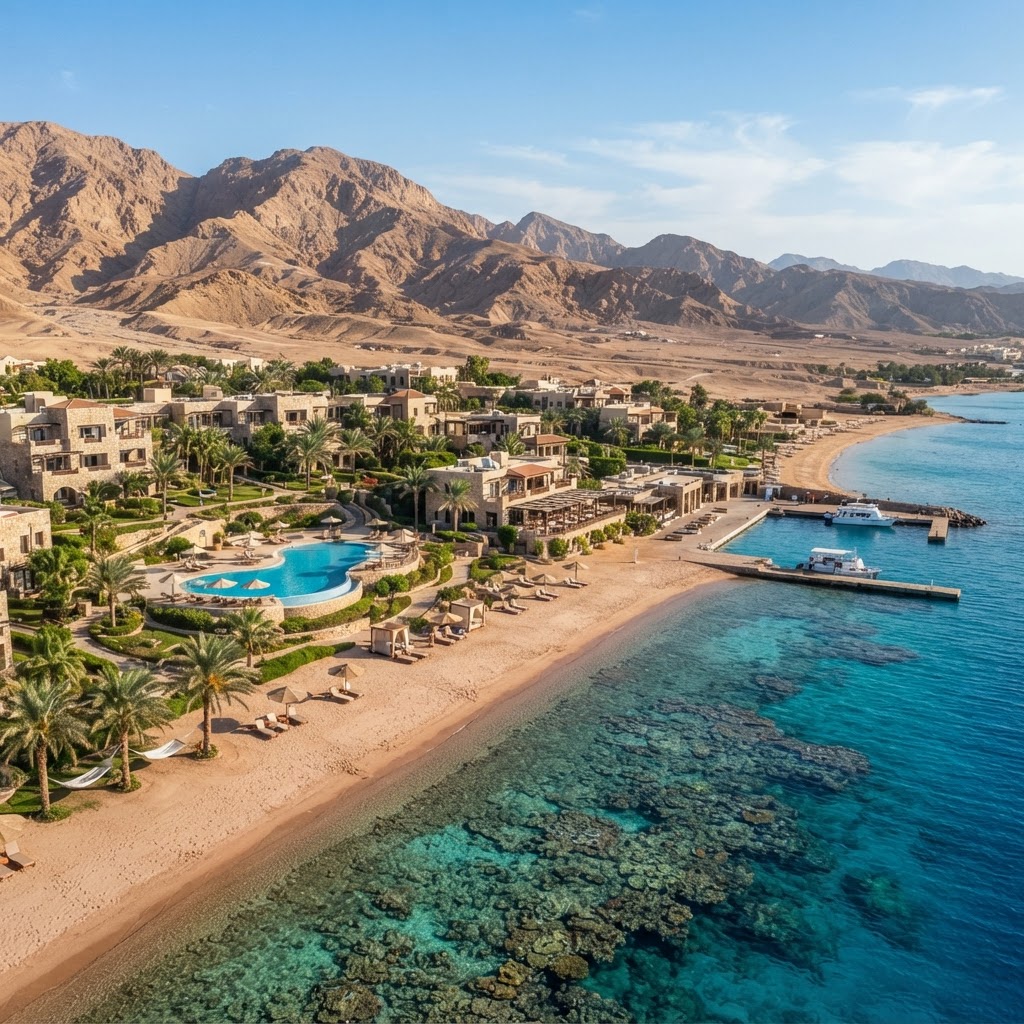

A Fish Left in the Water
There is a quote that sits at the heart of Wakatobi, spoken by the resort's founder, Lorenz Mäder: "A fish pulled out of the water turns to dust the moment you harvest it from the sea — but a fish left in its natural habitat is truly worth more than gold."
That single sentence explains everything about Wakatobi Dive Resort — why it exists, why it is remote, why it is expensive, and why people who have been there talk about it the way pilgrims talk about holy places. Mäder, a Swiss entrepreneur and diver, founded the resort in 1995 with a vision that was radical for its time: build a luxury resort not around golf courses or spas or infinity pools, but around a reef — and protect that reef so fiercely that the reef itself becomes the amenity.
Thirty years later, the vision has been realised in a way that exceeds anything Mäder could have imagined. Wakatobi protects 20 kilometres of coral reef through its Collaborative Reef Conservation Program, one of the largest privately-funded marine protected areas in the world. The reef is pristine — not merely 'good for Indonesia' or 'good for a resort house reef,' but genuinely world-class, the kind of coral ecosystem that marine biologists study and that snorkelers dream about. And the resort that sits beside it is a masterpiece of eco-luxury: hand-crafted villas, a private airstrip, a restaurant in a coconut grove, and a level of personal service so precise that the staff know your name within a day.
This is not a resort with a reef. This is a reef with a resort. And that distinction changes everything.
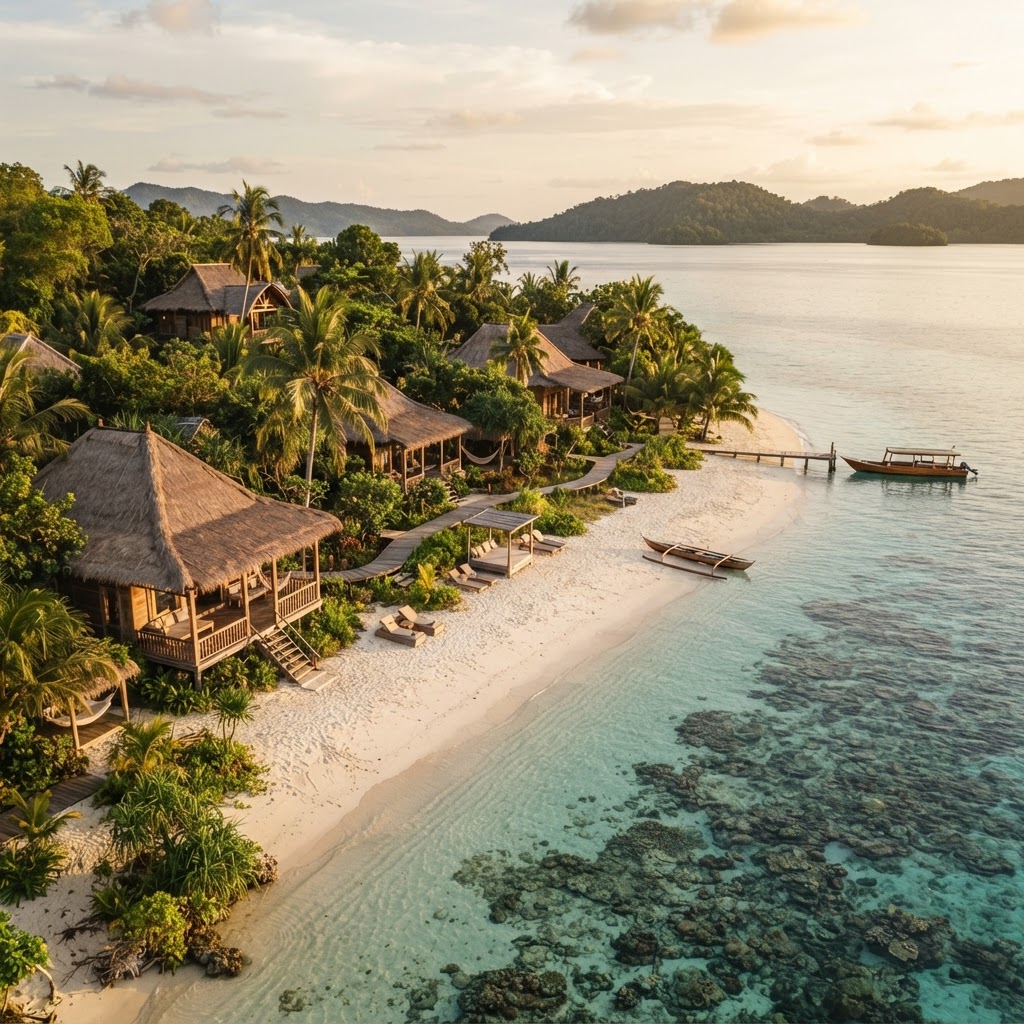
The house reef — 20 kilometres of the world's finest coral, directly in front of the resort
Quick Facts
- Location: Tomea Island, Wakatobi Regency, Southeast Sulawesi, Indonesia
- Nearest Airport: Wakatobi's private airstrip (accessible via the resort's private charter flight from Bali, approximately 2.5 hours)
- Beach Access: Direct — villas and bungalows are steps from the ocean and the house reef
- Local Nightlife: None. The resort is the destination. This is deliberate isolation.
- Property Size: Approximately 25 villas and bungalows
- Star Rating: 5-star eco-luxury dive resort
- Best For: Snorkelers, divers, conservation-minded travellers, those seeking true isolation and world-class reefs
- Price Range: From approximately $415/night per person (all-inclusive: meals, diving, snorkeling, boat trips)
- Adults Only: No official adults-only policy, but adult-oriented by nature
- Website: wakatobi.com
Getting There: The Pilgrimage
Wakatobi is remote. This is not a drawback — it is the point. The reef is pristine because the location is hard to reach, and the resort has chosen to keep it that way rather than chasing mass accessibility.
The journey is part of the experience. You fly to Bali, where you will likely spend a night (the resort's charter flight departs early morning from the domestic terminal). Then you board Wakatobi's private charter flight — a dedicated plane that flies directly to the resort's purpose-built airstrip on Tomea Island. The flight takes approximately 2.5 hours, crossing the Indonesian archipelago, the islands below shifting from lush green to arid brown as you move east toward the Banda Sea. On arrival, a short boat ride delivers you to the resort. Total travel time from Bali: under three hours.
The private charter flight is included in the stay, and it creates a particular kind of intimacy — everyone on the plane is going to the same place, sharing the same anticipation. By the time you land, you have already begun the transition from the world to the reef.
The House Reef: Wakatobi's Masterpiece
Everything at Wakatobi — the resort, the conservation program, the charter flight, the very reason for its existence — converges on one thing: the house reef.
The house reef sits directly in front of the resort. No boat needed. No guide required (though one is available). You walk into the water from the beach, and within moments you are over a coral ecosystem that defies description. Table corals the size of dining tables. Brain corals that have been growing for decades. Soft corals in pink, orange, and purple, swaying in the gentle current. And fish — clouds of fish, so many and so varied that the water seems alive in a way that most snorkelers have never witnessed.
The reef wall drops from shallow shelf to deep blue, and the visibility is staggering — 30 to 40 metres on a good day, which is not unusual at Wakatobi. The water is warm (27-30°C year-round) and the currents are gentle, which brings us to the signature Wakatobi snorkeling experience: the drift.
Here is how it works. A boat drops you at one end of the house reef. You float on the surface, mask down, and let the current carry you along the reef wall. The reef slides beneath you like a film — coral formations, fish schools, drop-offs, and shelves, each section different from the last. The current does the work. You simply breathe and watch. After an hour or more, the current delivers you back to the resort's beach, where you step out of the water exactly where you started your day.
It is, according to those who have experienced it, the most relaxing snorkeling experience on earth. Not because the reef is tame — it isn't, it is wild and vast and teeming — but because the current carries you, and the reef is so rich that every metre reveals something new. You don't chase anything. You don't swim against anything. You float, and the reef comes to you.
The drift — dropped at one end of the reef, the current carries you home
Beyond the house reef, the resort operates snorkel boats to nearby sites — each different, each spectacular. The boats are run with the precision of a Swiss operation: guides who know every site, staff who hand you a warm mint-infused towel the moment you surface, and cold or hot drinks waiting on the boat. Night snorkeling trips are also available, revealing the reef's nocturnal inhabitants — octopus, cuttlefish, and the bioluminescent magic of the tropical night sea.
The Conservation Story
It would be easy to write about Wakatobi purely as a luxury resort with a great reef. But that would miss the point. Wakatobi exists because of its conservation program, and the reef is pristine because of it.
In 1997, two years after founding the resort, Lorenz Mäder established the Collaborative Reef Conservation Program. Rather than fencing off the reef and excluding local communities — the approach of many marine parks — Mäder did something more radical: he partnered with them. The program pays local villages not to fish in protected areas, providing alternative income streams and a stake in the reef's preservation. The result is a marine protected area that is enforced not by guards but by the community itself, because the community benefits from the reef being alive rather than harvested.
Twenty kilometres of reef. Multiple villages. Thirty years of continuous protection. The result is a coral ecosystem that is not merely surviving but thriving — a benchmark for what marine conservation can achieve when it is done with intelligence, commitment, and genuine partnership.
For snorkelers, this matters in a tangible way. The fish are more abundant. The coral is healthier. The diversity is higher. You are not snorkeling a reef that is being loved to death — you are snorkeling a reef that is being actively, successfully protected. And your visit is part of that protection, because your stay funds the conservation program.
The Two-Bedroom Pool Villas — Wakatobi's premier accommodation
The Villas and Bungalows
Wakatobi offers five categories of accommodation, all hand-crafted in traditional Indonesian style, all spacious, all positioned within steps of the ocean. The architecture is a blend of Indonesian craftsmanship and Swiss precision — thatched roofs, wooden floors, natural materials, and an attention to detail that suggests the rooms were built by people who cared.
Palm Grove Bungalows
Set among the palms, slightly back from the beach. The entry-level accommodation, but 'entry-level' at Wakatobi means spacious, beautifully appointed, and comfortable. Each bungalow has air conditioning, a king bed, and a private bathroom with outdoor shower.
Ocean Bungalows
Positioned closer to the water with direct ocean views. The upgrade from Palm Grove — worth it for the view alone, waking up to the sight and sound of the reef just beyond your terrace.
Turtle Beach Bungalows
Directly on the beach, with the sand at your doorstep. Named for the turtles that nest on the resort's beach. The most romantic of the bungalow categories.
One-Bedroom Villas
Wakatobi's premier accommodation category. Larger than the bungalows, with a private garden and expanded living space. The villas are positioned for maximum privacy and ocean views, with private dive and snorkel guides included.
Two-Bedroom Pool Villas
The pinnacle of Wakatobi accommodation. Two bedrooms, a private pool overlooking the ocean, outdoor showers and a bathtub by the pool, and the kind of space and seclusion that makes the resort feel like your own private island. The pool villas are the choice for those who want the full Wakatobi experience without compromise.
Dining in a coconut grove, with the ocean beyond
Dining
The restaurant sits in a coconut grove, with views of the beach and ocean. Guests follow sand pathways through the palms to reach it — a nightly journey that sets the tone for the meal. The setting is open-air, the lighting is warm, and the atmosphere is intimate.
The food is freshly prepared using local ingredients, with a menu that blends Indonesian cuisine with international standards. Breakfast, lunch, dinner, and snacks are all included in the rate, and the quality is consistently high — a particular achievement at a remote resort where everything arrives by boat or plane. The fish is fresh, the vegetables are local, and the Indonesian dishes — nasi goreng, satay, gado-gado — are prepared with the kind of authenticity that comes from cooking for guests who have travelled halfway around the world to be here.
The Spa
After a day in the water, the spa is where the body recovers. Wakatobi's spa offers a full range of treatments — massages, facials, body treatments — in pavilion-style treatment rooms. The setting is serene, the therapists are skilled, and the treatments are the perfect complement to a day of drift snorkeling.
The Service
There is a particular quality to Wakatobi's service that every review mentions: the staff know your name within a day. Not just the front desk — the dive guides, the boat crew, the restaurant staff, the spa therapists. Everyone. And it is not a performance — it is genuine. The resort is small enough (approximately 25 accommodations) that the staff-to-guest ratio is extraordinary, and the result is a level of personal attention that most resorts can only aspire to.
The dive and snorkel operation is run with Swiss precision. Boats depart on time. Equipment is maintained to the highest standards. Guides are knowledgeable, patient, and genuinely passionate about the reef. The boats themselves are a masterclass in service — warm mint-infused towels on exit, drinks served immediately, and a crew that anticipates your needs before you voice them.
Who Is This For?
Wakatobi is for the snorkeler or diver who has been to the Red Sea, the Maldives, the Caribbean, and the Great Barrier Reef, and is looking for something rarer. For the traveller who understands that the best things are often the hardest to reach. For the conservation-minded guest who wants their holiday spending to actively protect the reef they are enjoying. And for anyone who has ever dreamed of floating over a pristine coral wall, carried by a gentle current, watching clouds of tropical fish drift past in water so clear it disappears.
It is not for those who want nightlife, shopping, or the conveniences of a major resort destination. Wakatobi is deliberately isolated, and that isolation is what makes the reef what it is. You go to Wakatobi for one reason: the reef. And the reef is worth the journey.
Getting There
Fly to Bali (Denpasar International Airport, DPS), which receives direct flights from London, Sydney, Singapore, Hong Kong, Tokyo, and most major Asian and European hubs. Plan to spend one night in Bali — the resort's charter flight departs early morning from the domestic terminal. The private charter flight to Wakatobi's airstrip takes approximately 2.5 hours, followed by a short boat transfer to the resort. The charter flight is arranged by the resort and included in the stay.
Best Time to Visit
Wakatobi is a year-round destination, sitting in a rain shadow that makes it drier than much of Indonesia. March to May and September to November offer the calmest conditions and best visibility — 30-40 metres is not unusual. Water temperature is consistently 27-30°C year-round. The resort has seasonal variations in marine life: manta rays are more common in certain months, and different fish species are active at different times of year. There is no bad time to snorkel at Wakatobi — only different times.
Sunset at Wakatobi — the end of a day on the world's finest house reef
The Verdict
Wakatobi Dive Resort is not just a hotel. It is a thirty-year conservation project that happens to offer world-class accommodation, a private charter flight, hand-crafted villas, and a restaurant in a coconut grove. The reef — 20 kilometres of it, protected by a community-based conservation program that is one of the most successful in the world — is the reason for everything. And the reef is magnificent.
For snorkelers, the drift experience is unmatched. Being dropped at one end of the house reef and letting the current carry you back to the beach, floating over coral gardens so rich and so healthy that every metre reveals something new — this is snorkeling as it was meant to be. Effortless, immersive, and endlessly surprising.
Is it expensive? Yes. Is it remote? Deliberately. Is it worth it? If you love the ocean — truly love it, in the way that the best snorkelers and divers do — then Wakatobi is not just worth it. It is the destination. The one you save for. The one you dream about. The one that, once you've been, changes your standard for every reef that comes after.
Lorenz Mäder was right. A fish left in the water is worth more than gold. And at Wakatobi, you can float above that truth for as long as you like.
Verified Traveler Scorecard
The Hotels-Reviewed Verified Traveler Scorecard aggregates structured, verified guest ratings to provide high-trust social proof.
- Staff Service: ★★★★★ (5.0/5)
- Rooms & Comfort: ★★★★★ (4.8/5)
- Food & Dining: ★★★★★ (4.7/5)
- Pool & Facilities: ★★★★★ (4.6/5)
- Location & Setting: ★★★★★ (5.0/5)
- Value for Money: ★★★★☆ (4.0/5)
- Snorkeling & Diving: ★★★★★ (5.0/5)
Overall Verified Score: 4.73 / 5.0