The Hotel That Is the Amalfi Coast
Some hotels are in a destination. Some hotels are a destination. And a very few hotels are so deeply intertwined with their place that to separate them would be to diminish both. Hotel Santa Caterina is the third kind. It has been owned and run by the same family — the Cuofano family — since 1900, and in that time it has become not just a hotel on the Amalfi Coast but the embodiment of the Amalfi Coast itself: the warmth, the beauty, the food, the tradition, and the particular quality of hospitality that the Amalfitans call accoglienza — welcome.
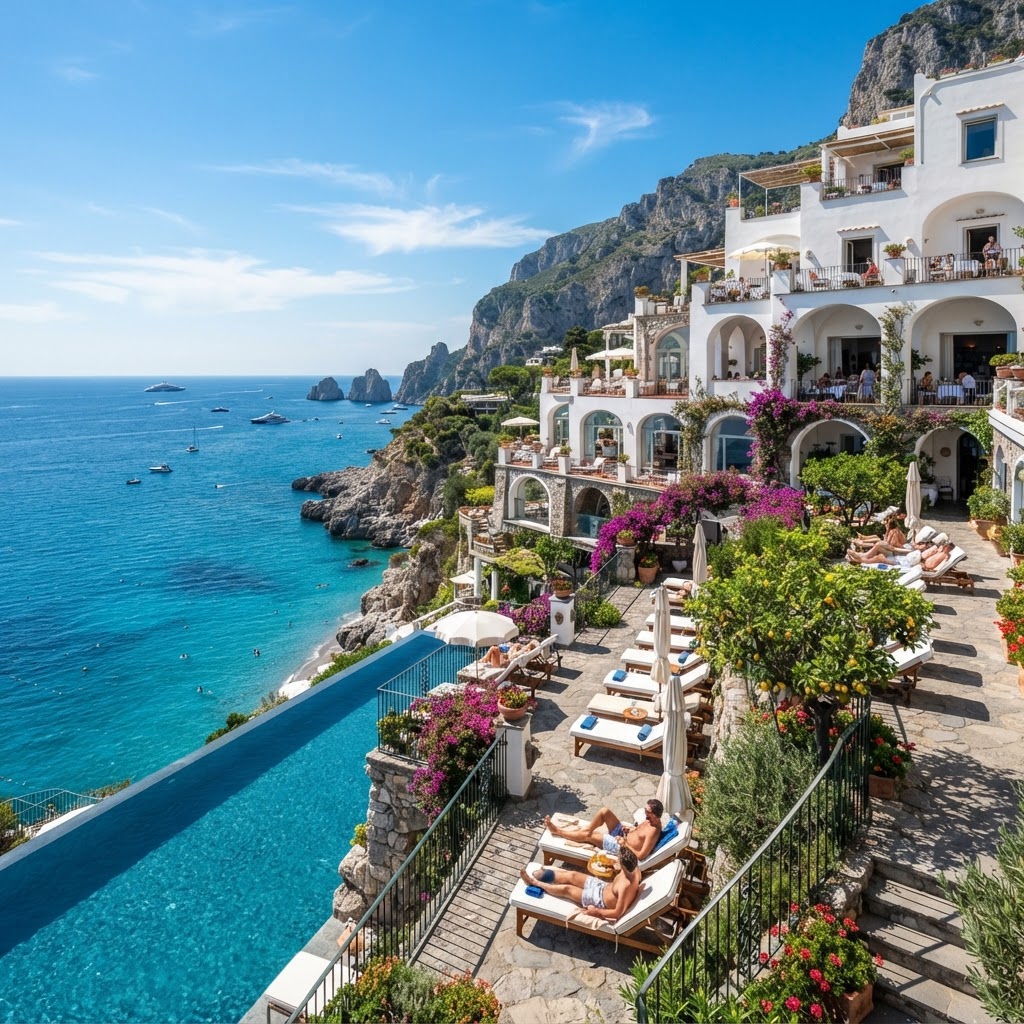
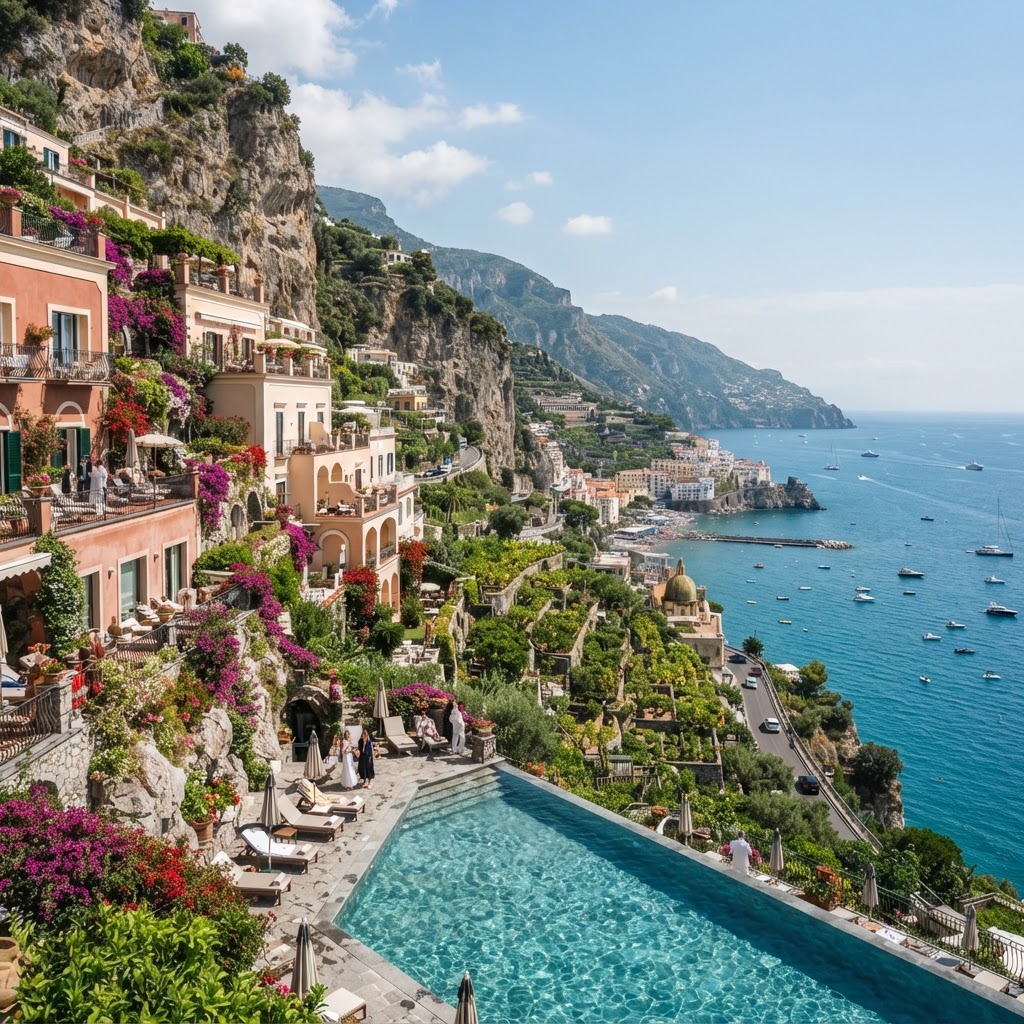
The hotel sits on the cliff above the sea, between the town of Amalfi and the village of Conca dei Marini, on the road that snakes along the coast from Positano to Salerno. The building is a pink and cream Art Deco villa, set in lemon groves and gardens, with terraces that look directly down to the Tyrrhenian Sea. The position is one of the most beautiful on the entire Amalfi Coast — and on a coast where every view is spectacular, that is a high bar.
What makes Santa Caterina special is not any single thing but the cumulative effect of a century of family care. The paintings on the walls were chosen by family members. The furniture was sourced by them. The lemon trees in the garden were planted by them. The restaurant menu was built on recipes from their grandmother. The staff — many of whom have been at the hotel for decades — are treated as family. And the guests, many of whom return year after year, are treated the same way. This is not a hotel that was designed by a committee and is operated by a corporation. It is a home, and it feels like one.
The Rooms: Amalfitan Elegance
The 66 rooms and suites at Hotel Santa Caterina are distributed across the main building and a newer wing, connected by corridors and terraces that wind through the gardens. The style is classic Amalfitan — hand-painted Vietri tiles, whitewashed walls, wrought-iron bed frames, and furniture in the Italian Mediterranean style. Every room has a sea view, and the sea views here are not 'sea view' in the technical sense that many hotels use — they are genuinely panoramic, taking in the full sweep of the coastline, the sea, and the sky.
The Rooms
The standard rooms — called Classic Rooms — are not large, but they are perfectly composed. A bed dressed in white linens, a small sitting area, a bathroom with Vietri tiles and a walk-in shower, and a balcony with a table and chairs positioned to face the sea. The decor is warm and personal — ceramic lamps, hand-embroidered cushions, and prints of the Amalfi Coast that feel like family photographs rather than hotel decoration.
The Junior Suites
The Junior Suites add space and a separate sitting area, with a larger balcony or terrace. Some have a Jacuzzi on the terrace, positioned so that you can soak while looking at the sea — one of the great Amalfi experiences. The suites are larger still, with separate bedrooms and living rooms, and the top categories — the Family Suites and the Penthouse Suite — have private terraces with sun loungers and dining areas.
The Presidential Suite
The Presidential Suite is the hotel's signature: a two-bedroom suite on the top floor, with a panoramic terrace that takes in the entire coastline from Amalfi to Capri. The terrace has a Jacuzzi, sun loungers, a dining table, and a sitting area — it is essentially a private garden in the sky, and it is one of the most romantic outdoor spaces on the Amalfi Coast.
The Restaurant: Amalfitan Soul
The restaurant at Hotel Santa Caterina is one of the best on the Amalfi Coast, and it has been recognised by the Michelin Guide with a star. The chef — who has been with the hotel for years — works with the produce of the Amalfi Coast: the fish from the Tyrrhenian, the lemons from the groves above the hotel, the tomatoes and aubergines and peppers from the terraced gardens, the olive oil from the hills, and the mozzarella from the local producers.
The Cuisine
The cuisine is Amalfitan at its core — simple, ingredient-driven, and rooted in tradition. The seafood is the star: scampi from the Tyrrhenian, served raw with olive oil and lemon, or in a pasta with cherry tomatoes and basil. The fish — sea bream, sea bass, dentice — is grilled over charcoal and served with olive oil and lemon. And the lobster — caught locally and prepared to order — is the signature, served with a bisque that is one of the best dishes on the coast.
The non-fish dishes are equally accomplished. The pasta — handmade daily — includes the classic Amalfitan dishes: scialatielli with seafood, paccheri with lobster, and the local speciality, ndunderi — a type of gnocchi made with ricotta and flour, which is said to be the oldest pasta in Italy. The meat dishes — lamb from the mountains, veal from the local farms — are treated with the same respect as the seafood. And the vegetables — the aubergines, peppers, and tomatoes that the Amalfi Coast is famous for — are served in the classic preparations: melanzane alla parmigiana, peperoni ripieni, and the tomato salad that is the taste of an Amalfi summer.
The Lemons
The Amalfi Coast is famous for its lemons — the Sfusato Amalfitano, a large, sweet, intensely aromatic lemon that is used in everything from pasta to dessert to the local liqueur, limoncello. The lemon groves above the hotel produce some of the best on the coast, and the hotel's kitchen uses them in every possible way: in the pasta, in the fish dishes, in the desserts (the lemon delizia — a dome of lemon cream and sponge — is the signature Amalfi dessert, and Santa Caterina's version is one of the best), and in the limoncello, which is made by the family and served complimentary at the end of every meal.
The Wine
The wine list is deep in Campanian and Italian producers. The local wines — Falanghina (white), Aglianico (red), and Greco di Tufo (white) — are the best pairing for the Amalfitan cuisine, and the sommelier can guide you through the regional producers with genuine knowledge. For special occasions, the cellar has verticals of the great Super Tuscans and Barolos, and the champagne list is extensive.
Breakfast
Breakfast at Santa Caterina is served on the terrace overlooking the sea, and it is a feast: fresh breads, croissants, local cheeses and cured meats, fruit from the Amalfi Coast (the melon, figs, and peaches are exceptional), eggs any style, and the local pastries — sfogliatelle, babà, and the lemon cakes that are the taste of the Amalfi morning. The coffee is Neapolitan — strong, dark, and perfect — and the fresh orange juice is squeezed from the oranges of the coast.
The Beach Club: A Private Cove
Hotel Santa Caterina has its own private beach club — a terrace and a small pebble cove at the base of the cliff, accessible by a lift from the hotel. The beach is one of the few genuinely private beaches on the Amalfi Coast, and it is equipped with sun loungers, parasols, a bar, and a restaurant.
The water here is some of the clearest on the coast — the Tyrrhenian off Amalfi is a deep blue that shifts to turquoise in the shallows, and the rocks at the edges of the cove are alive with fish. The beach is small — it is not a sand beach but a rocky platform with sun loungers — but it is private, calm, and perfectly positioned for swimming in the sea that is the Amalfi Coast's greatest asset.
The Beach Restaurant
The beach club has its own restaurant — a more casual version of the main restaurant, serving salads, pasta, grilled fish, and the kind of long, slow Mediterranean lunch that is one of the great pleasures of an Amalfi day. Eating fresh spaghetti with clams, on a terrace above the sea, with your feet in the sun and a glass of Falanghina in hand, is the Amalfi experience at its most essential.
The Spa: Wellness on the Cliff
The spa at Hotel Santa Caterina is set in a cave carved into the cliff, overlooking the sea. The setting is extraordinary — the treatment rooms have windows that look out over the water, and the combination of the natural stone, the sea light, and the silence creates a spa atmosphere that is genuinely unique. There is a small indoor pool, a sauna, a steam room, and a relaxation area, and the treatments draw on both Italian and Mediterranean traditions.
The signature treatment is the Amalfi Lemon Ritual — a two-hour treatment that uses the lemons from the hotel's grove. It begins with a lemon-scented body scrub, moves through a massage with lemon-infused olive oil, and finishes with a facial using lemon and honey. The lemon is not a gimmick — it is genuinely therapeutic, and the treatment leaves the skin soft, the body relaxed, and the mind refreshed. It is, quite possibly, the most Amalfitan spa treatment in existence.
Amalfi: The Maritime Republic
Amalfi is one of the great towns of the Italian coast. It was, in the Middle Ages, one of the four Maritime Republics of Italy (along with Venice, Genoa, and Pisa), and its wealth and influence were felt across the Mediterranean. The cathedral — the Duomo di Sant'Andrea — is a magnificent Arab-Norman structure that dominates the main piazza, and its cloister — the Chiostro del Paradiso — is one of the most beautiful in Italy.
The town itself is a maze of narrow lanes, white houses, and stairs that lead down to the harbour and up into the lemon groves. The paper museum — the Museo della Carta — celebrates Amalfi's historic role as the first place in Europe to produce paper, and the workshops still produce handmade paper using medieval techniques. The harbour is full of fishing boats and the boats that take tourists to Capri, Positano, and the Grotta dello Smeraldo (the Emerald Grotto, a sea cave with spectacular underwater light).
Ravello
A 20-minute drive up the mountain from Amalfi is Ravello — a village perched on a cliff 365 metres above the sea, with views that are among the most spectacular in Italy. Ravello is famous for its gardens — the Villa Cimbrone and the Villa Rufolo — which have been inspiring artists and writers for centuries. The Villa Rufolo's terrace — the Terrace of Infinity — is one of the most photographed views in the Mediterranean, and the annual Ravello Music Festival, held in a stage built into the cliff, is one of the great Italian cultural events.
Positano
Positano — the most famous town on the Amalfi Coast — is a 30-minute drive from the hotel. It is a vertical village of pastel-coloured houses cascading down the cliff to a small beach, and it has been a destination for artists, writers, and fashion designers since the 1950s. The shops sell the local linen clothing and ceramics, the restaurants are excellent, and the beach — the Spiaggia Grande — is one of the most iconic in Italy. But Positano in summer is crowded — very crowded — and the advantage of staying at Santa Caterina, in quieter Amalfi, is that you can visit Positano by day and return to the relative calm of Amalfi in the evening.
Capri
The island of Capri is a 50-minute hydrofoil ride from Amalfi harbour, and a day trip to Capri is one of the great Amalfi Coast experiences. The island — with its Blue Grotto, its designer boutiques, its cliff-top villas, and its spectacular coastal walks — is one of the most beautiful places in the Mediterranean. The hotel can arrange private boat tours of the island, including stops at the grottos, the Faraglioni rocks, and the quiet beaches accessible only from the sea.
Getting There
Hotel Santa Caterina is a 50-minute drive from Naples International Airport, or a 70-minute drive from Salerno. The hotel can arrange private transfers, and the drive — along the coast road, through the mountains, with the sea below — is one of the most beautiful in the world. Alternatively, there are direct ferries from Naples to Amalfi in the summer months, and the hotel can arrange a transfer from the harbour.
Who Will Love Hotel Santa Caterina
Hotel Santa Caterina is for travellers who want the Amalfi Coast at its most authentic. It is not the most modern hotel on the coast — it is not a design hotel, and it does not pretend to be. It is a family hotel, in the truest sense of the word, and it offers something that no design hotel can replicate: a century of accumulated warmth, tradition, and knowledge of this coast and its people.
It is for couples seeking a romantic escape in a setting of genuine Italian elegance. It is for families who want to experience the Amalfi Coast as a place, not a postcard. And it is for food lovers — those who travel for restaurants rather than views, and who will appreciate the Michelin-starred cuisine, the Amalfitan recipes, and the lemons from the garden above the hotel more than any pool or spa.
In a coast of spectacular hotels, Santa Caterina is the one with soul. And soul, on the Amalfi Coast, is the luxury that cannot be bought — only earned, over generations, by a family that cares. The Cuofano family has been earning it for over a century. You can feel it the moment you arrive.