The Promise and the Small Print
All-inclusive sells a beautiful idea: one price, paid once, and the holiday is already bought. No wallets at dinner, no bills to check, no mental arithmetic on the sunbed. When it is done well, it is the most relaxing way to travel ever devised. When it is done cheaply, it is a supermarket sweep with a wristband: technically unlimited, quietly stingy, and finished by 6pm.
The difference between those two holidays is not the price you paid. It is what the words on the booking actually meant. And the words are far from standard.
First, Know Your Tier
"All-inclusive" is not one product. The market has quietly tiered itself:
Standard all-inclusive covers meals in the main buffet, local-brand drinks at the bars, and snacks at set times. Premium brands, sparkling wine and anything in a mini-bar is extra.
Premium or "privileged" all-inclusive adds imported drinks, a la carte dining without supplements, restocked minibars and longer service hours. This is the tier where the wristband stops feeling like a ration book.
Ultra all-inclusive, a Turkish speciality now spreading across the Med, treats the concept as a point of honour: twenty-four hour dining, real glassware around the pool, imported spirits, à-la-carte venues included, and the bar staff who remember your order by day two. Voyage Belek, on Turkey's golf coast, is the flagship of this school, down to the drinks served in glass, even poolside.
Ikos Resorts are the Greek school of the same idea, and the closest all-inclusive gets to fine dining: menus designed by Michelin-starred chefs, a collective of world-renowned chefs across the restaurants, a hundred wine labels selected by the house sommelier included in the stay, and premium beers and spirits restocked in your suite's fridge rather than sold back to you. There are eight of them now across Greece and Spain, from Halkidiki to Corfu, Kos, Crete, Mallorca and the Costa del Sol, and their Dine Out programme even includes meals at hand-picked local restaurants beyond the resort. We have reviewed three of them in depth: Ikos Aria on Kos, Ikos Dassia on Corfu and Ikos Olivia in Halkidiki. When the minibar is a feature rather than a toll booth, you have found the top of the tier.
The tell between tiers is rarely the headline; it is the small print under it. One resort's "all-inclusive" ends with the lunchtime service bell. Another's includes the 3am kitchen. Both are legally telling the truth.
What Quietly Isn't Included
Every all-inclusive has its shadow bill. The common exclusions, in rough order of how often they surprise people:
Tourist taxes. In the Balearics, the Sustainable Tourism Tax runs at up to €4 per person per night in high season for top-tier hotels, and it is never in your package price. In Greece, the Climate Crisis Resilience Fee ranges up to €15 per room per night by star rating, and is settled separately; we have confirmed with reservations teams that even at boutique properties it is paid at the front desk on arrival, not absorbed in your booking. A family of four can arrive to well over £100 of taxes that the "everything included" price never touched. Budget for it before you fly, not at the desk.
The à-la-carte ceiling. Most resorts include their specialty restaurants in theory and ration them in practice: two visits per week, a booking window that opens at 7am, a supplement on the lobster menu. Ask the question before you book: how many à-la-carte visits are included, and how far in advance do they book out?
The brand line. The bar has a premium shelf; whether your wristband reaches it is a different matter. Cheap all-inclusives pour local spirits and charge for the imported names. Good ones publish the included brand list. Ultra properties skip the conversation entirely.
The rest. Spa treatments, motorised watersports, kids club sessions outside core hours, in-room safe hire, premium Wi-Fi tiers, minibar refills beyond the first day: these are the classic extras. None are hidden, exactly; they are just written down once, in a PDF, before you were a customer.
Tip Tip Tip: The Few Pounds That Change Everything
Here is the advice that separates the people who know how to work an all-inclusive from the people still learning: the ones who expect the wristband to do the pampering on its own.
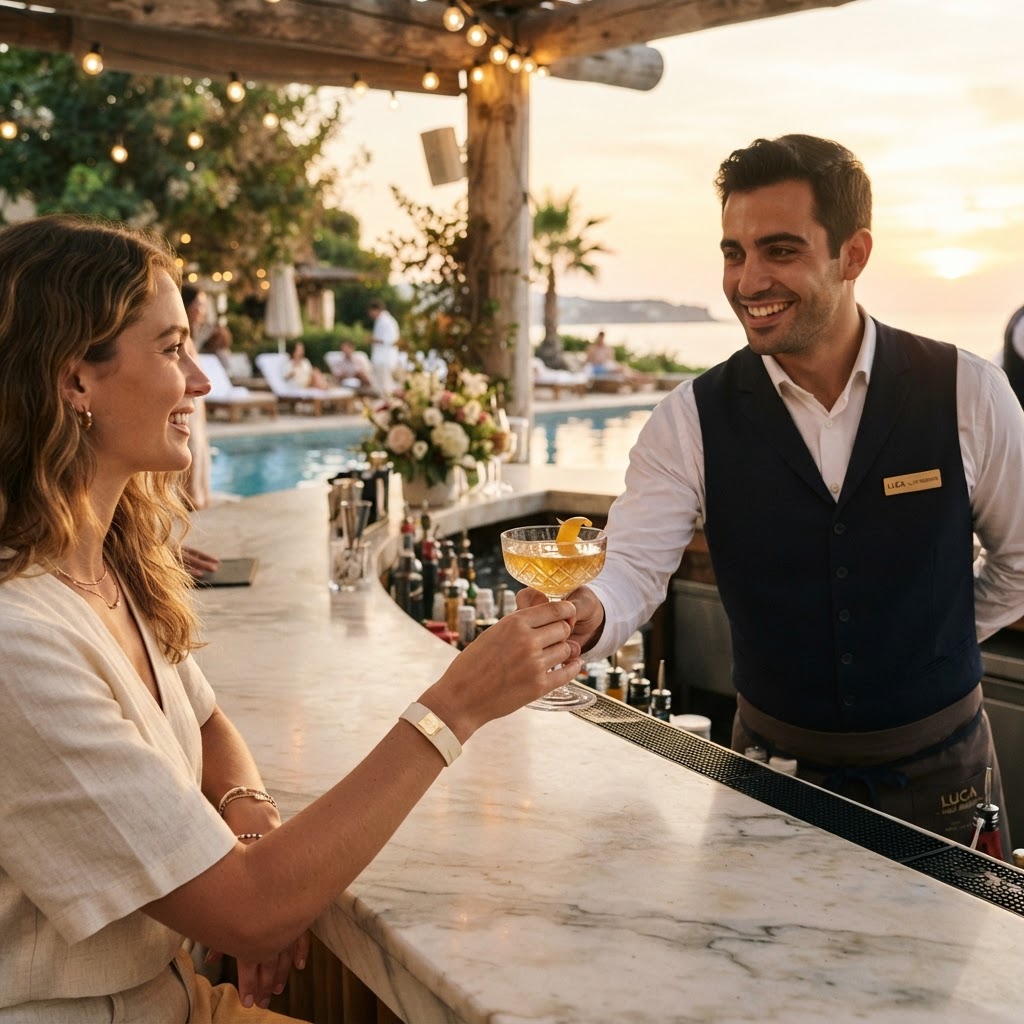
All-inclusive creates a quiet myth that tipping is included, so nobody tips, so service flattens to polite and anonymous for everyone. Break that on day one. Walk the resort in your first two hours and find your people: the pool waiter who works your section, the barman on your afternoon bar, the server in the restaurant you will visit most, the housekeeper on your floor. A few pounds, handed over early, with your name and theirs, does more for a week at a big resort than a large tip handed over at the end. You are not buying favours; you are becoming a regular in a village of strangers, and regulars get remembered: the lounger before it's asked for, the drink that arrives before the order, the corner table that was somehow free.
The sums are small. Ten or twenty pounds distributed at the start of the stay, and perhaps the same again midweek, converts an all-inclusive from a serviced queue into something closer to a private club. It remains the highest-return money you will spend on the holiday, including the holiday itself.
How to Get the Most From It
1. Book your à-la-carte restaurants on day one. Not day two. The booking window is the single most contested resource at any resort, and the guests who booked flights are beaten by the guests who booked tables.
2. Read the inclusions list before you book, not after. The PDF on the booking page is the contract of your happiness. Brand lists, restaurant limits, kids club hours, service times: all there, all quotable.
3. Learn the day's shape. Snack bars, ice cream windows, the bakery hour, the beach grill at lunch. All-inclusive rewards the people who know the timetable and ignores everyone else.
4. Do the 3pm test. Walk the pool at peak time before you commit next year. If the fridges are stocked, the bar queue is short and the glasses are glass, you are at a good one. If it's plastic, queued and picked over, you have learned something cheaply.
5. Ask what's local. A resort proud of its region pours it and cooks it. A resort hiding behind imports is usually hiding a supplier contract.
Good All-Inclusive vs Bad All-Inclusive
The markers of a good one: real glassware around the pool; à-la-carte included without supplements; snacks available between meals, not just at them; pool and beach service; a kids club that is actually included; staff who stay seasons, not weeks; and the restaurant that keeps a table free for the couple who tipped on day one.
The markers of a bad one: the one-drink-per-person rule at a family resort; the premium shelf that only exists to be excluded; dinner that closes at 9pm sharp; sunbeds that require an alarm clock; and supplements stacked so high the "included" restaurants are the ones you stop using. When the main complaint pattern in guest feedback is queues, rationing and surprise charges, that is a resort that priced the marketing, not the experience.
The proof cases sit in our own review library: a family-run Sharm resort like Sultan Gardens shows what a genuinely generous all-inclusive feels like on a normal budget, while our research desk keeps a running living record on what each resort's wristband honestly covers.
The Verdict
All-inclusive is not a product; it is a spectrum with a marketing department. Done well, it is the most relaxing way to holiday ever invented, and the ultra tier has quietly become one of the best values in luxury travel. Done cheaply, it is a buffet with a licence to stop trying. The stars on the door tell you almost nothing; the small print, the timetable, and the glassware tell you everything.
Do your homework before you book, tip your people on day one, and the wristband earns its keep.
Quick Questions
Is tipping expected at an all-inclusive?
At most resorts it is not obligatory, which is exactly why it works so well. A few pounds early buys you nothing on the bill and everything in the service. Check whether service charges are already added, then tip the people who run your week anyway.
Are drinks really unlimited?
In quantity, usually yes. In quality, it depends entirely on the tier: standard all-inclusive pours local brands, premium adds the imported shelf, ultra skips the distinction. Read the brand list before booking.
How much extra should I budget on top of the package?
As a rule of thumb, allow for local tourist taxes first (up to €4 per person per night in the Balearics, up to €15 per room per night in Greece by star rating), then a modest allowance for spa and specialty dining. On a well-chosen premium or ultra resort, the extras bill can be close to zero apart from the taxes.
What single thing improves an all-inclusive stay most?
Booking your à-la-carte tables on day one, and tipping the staff who will look after you, also on day one. Both take ten minutes; neither can be recovered in week two.
One last thing from us. The wristband covers the price of the holiday; the first two hours decide what it is actually worth. Walk the resort before the welcome drink wears off, find your people, book your tables, and be the guest the staff are pleased to see. We will keep doing the homework so you do not have to; that part is ours. Everything after that is simply a good time.
— from all of us at Hotels~Reviewed